Solidarity Statement: Gabes 2025
We stand in solidarity with the People of Gabès in their demands to dismantle the units and their fight for justice, life and dignity.
In recent weeks, environmental catastrophe has escalated once again in Gabès. The city and its coasts have been turned into a toxic waste dump by the unchecked operations of the Chemical Group of Tunisia, poisoning air, water, and land. No human, plant, or animal has been spared. Decades of official silence and neglect have pushed people back into continuous organising for environmental and social justice and into the streets in protest, demanding an end to this slow violence.
The Chemical Group of Tunisia, established under French colonial rule and now operating as a state-owned enterprise, has long processed phosphate rock extracted from regional mining basins. This phosphate industry is part of an extractive, export-oriented economy that prioritises profit over people and ecosystems. In Gabès, its legacy is devastating: toxic phosphogypsum waste is dumped into the sea, while the surrounding air is saturated with polluting, toxic gases. Despite a 2017 government commitment to dissolve the polluting complex, recent decisions are proof of the contrary. These include the removal of phosphogypsum from the list of hazardous materials, and plans to expand the area’s role in the so-called “green” economy through new facilities for green ammonia and hydrogen – posing new threats disguised as clean development policies.
As one local activist told Nawaat [1]:
“It seems that our inevitable fate in Gabès is to breathe toxic gases and suffer from all the diseases caused by water and air pollution. The world's only coastal palm oasis is doomed to a slow death, and the sea, once rich with the finest fish, has become a graveyard for marine life [...] We have to be the perfect victim when we suffocate, get sick, and die. We are supposed to smile and thank the state [...]. We have warned repeatedly and organized numerous awareness campaigns about the dangers of chemicals that are dumped into the sea and poured directly into the ground and the air we breathe (air that is like poison). [...] The situation has reached such a point that we have resorted to all forms of protest, and the government promised to dismantle the industrial units, but then reneged on all its commitments. [...] For fifty years, Gabès has been suffering from environmental degradation. Humans, animals, the sea, palm trees, the land, and even the stones, every inch of Gabès is a victim of pollution."
Gabès has sounded the alarm for decades through protests, health reports, awareness campaigns and testimonies. The last straw came when students at Shat al-Salam middle school began collapsing from toxic exposure, suffering from breathing difficulties, paralysis, and other severe symptoms. This is in a region already known for sky-high cancer and bone fragility rates. This is not an accident. It is policy.
On October 15, 2025, on the anniversary of the expulsion of the last French soldiers from Tunisia in 1963 after a long liberation struggle, tens of thousands in Gabès mobilized on this symbolic day to demand the full decolonisation of their land, sea and sky from extractive exploitation. Thousands of citizens expressed their determination to close the chemical complex and their rejection of the government's policy of procrastination and neglect. The slogan resounded across all municipalities: "The people want the units dismantled."
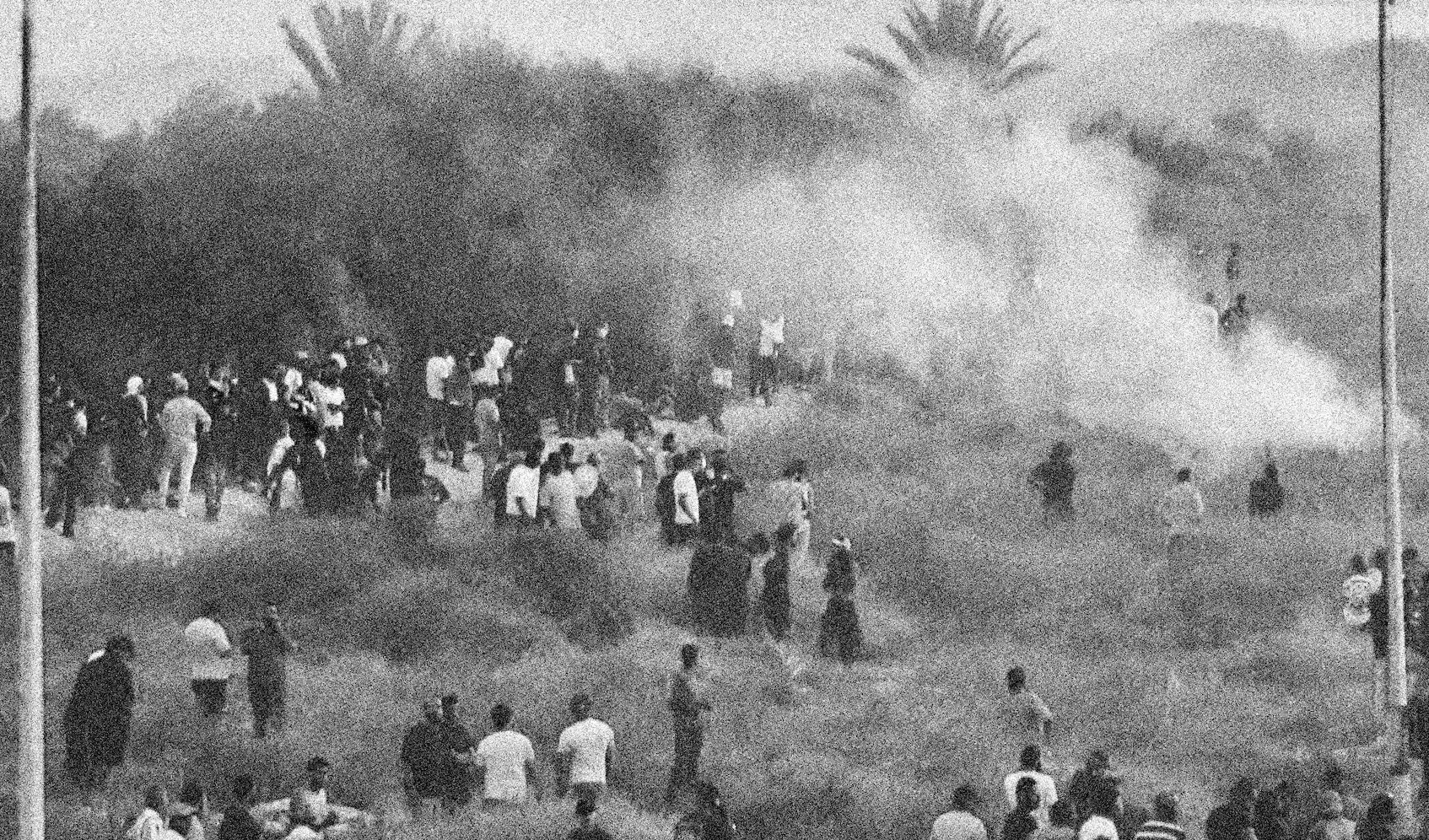
Peaceful demonstrators – youth, students, workers, farmers, elders – were met with tear gas in residential neighbourhoods, near schools, and outside the chemical complex itself. Dozens of activists were arrested and are still held in detention. Yet, attempts to repress the movement and discredit it as violent or foreign-led are failing. On October 21, the communities organised for a general strike that achieved 100% participation and mobilised hundreds of thousands of protestors in Gabès and in several decentralised protests in the capital and across the country, marking a historical day in their fight for dignity, land and life. This is a mass uprising rooted in lived experience, decade-long organised resistance, and a profound sense of justice.
We express our deep solidarity with the people of Gabès, who have long been at the frontline of a struggle for environmental and social justice. As affirmed in a statement by a coalition of local organisations published on October 11, 2024 – from different areas of activism such as health, disability justice, feminism, legal advocacy, labor, art, and academia – what Gabès is experiencing is “not only an environmental crisis, but also a stark example of inequality and lack of citizenship, where narrow economic interests are prioritised at the expense of the right to life, dignity, and environmental justice.”
For decades, the people of Gabès have resisted pollution, marginalisation, and government inaction. The joint statement honors this resilience, "affirming that these struggles are a collective asset and a living conscience on which the future of the region must be built.”
It affirms that “environmental justice is inseparable from social justice, and that Gabès is not a sacrifice zone but a living space that must be restored for the benefit of its inhabitants.”
We echo and uplift their demands for:
- An end to the operation of the chemical complex.
- The release of all those detained for protesting and demanding justice.
- The full implementation of the 2017 government commitments to dismantle polluting units with transparency and urgency.
- An independent investigation into the recent environmental leaks, with full accountability for any negligence or cover-up.
- Reversal of the government’s decisions from March 2025, which include the expansion of phosphate production, green ammonia and hydrogen projects, and the dangerous removal of phosphogypsum from the list of hazardous materials.
- The development of an alternative regional program, together with the affected communities, activists and civil society, that ensures both ecological sustainability and the labor and economic rights of the people.
- And a call for all civil, human rights, and labor forces to unite in imposing a radical solution that centers human dignity and environmental justice.
Today, the people of Gabès are reviving a long-standing struggle that resonates across Tunisia and the wider region – a struggle that puts forward clear demands for environmental justice, while remaining deeply linked to the broader struggle for social justice. Rooted in the defense of land and memory, this movement challenges decades of exploitation and fights for a future where life is more important than profits.
We join this struggle in solidarity recognizing that the fight in Gabès is part of a global resistance to extractive economies, dispossession, environmental racism and systemic injustice.
The people of Gabès are not alone. We are with you.